The Marziano Tarot
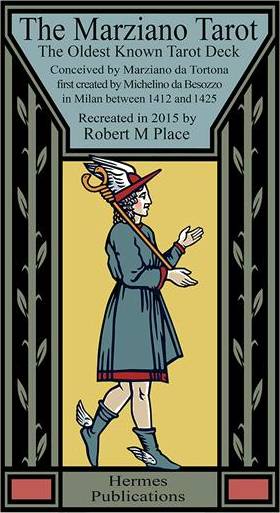
The Marziano Tarot holds a remarkable place in tarot history. Created between 1412 and 1425 in Milan by Michelino da Besozzo for court humanist Marziano da Tortona, it is considered the earliest known trump-style deck. The original cards have not survived, but a detailed description appears in a 1449 letter from Jacopo Antonio Marcello to Queen Isabelle of Lorraine. Robert M. Place used this letter, alongside Renaissance woodcuts, early printed cards, and other period sources, to reconstruct what the deck might have looked like had it evolved into a standard tarot format reproduced in hand-colored woodcuts.
The 64-card structure is notably different from a modern tarot: the four suits are Eagles, Doves, Turtledoves, and Phoenixes, each with ten pip cards, a King, and a Queen. The trump sequence consists of sixteen classical deities arranged in four groups corresponding to the suits. For anyone serious about tarot history, this is one of the most important and thoughtfully realized historical reconstructions available.
About the Creator
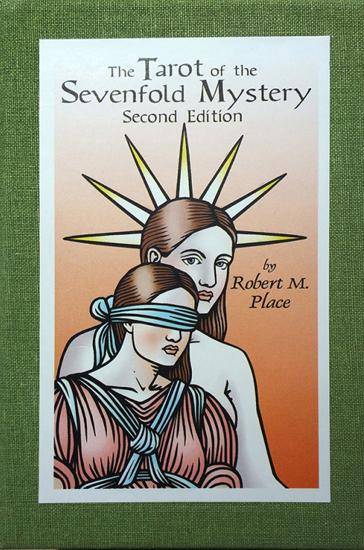
Robert M. Place is a visionary artist whose paintings, sculptures, and jewelry have been exhibited in galleries and museums across the United States, Europe, and Japan. He is the creator and co-author of numerous acclaimed tarot decks including The Alchemical Tarot, The Tarot of the Saints, The Buddha Tarot, The Vampire Tarot, and The Tarot of the Sevenfold Mystery. His book The Tarot: History, Symbolism, and Divination was described by Booklist as possibly the best book ever written on the subject. His Facsimile Historic Italian Tarot is held in the collection of the Metropolitan Museum of Art.
What do the cards have in store for you?
Discover our tarot readingsSimilar Decks