Everyone You Know Suddenly Owns a Tarot Deck. Here's Why.
By Zara
Table of Contents
Okay, let’s just say it. Tarot is having a moment.
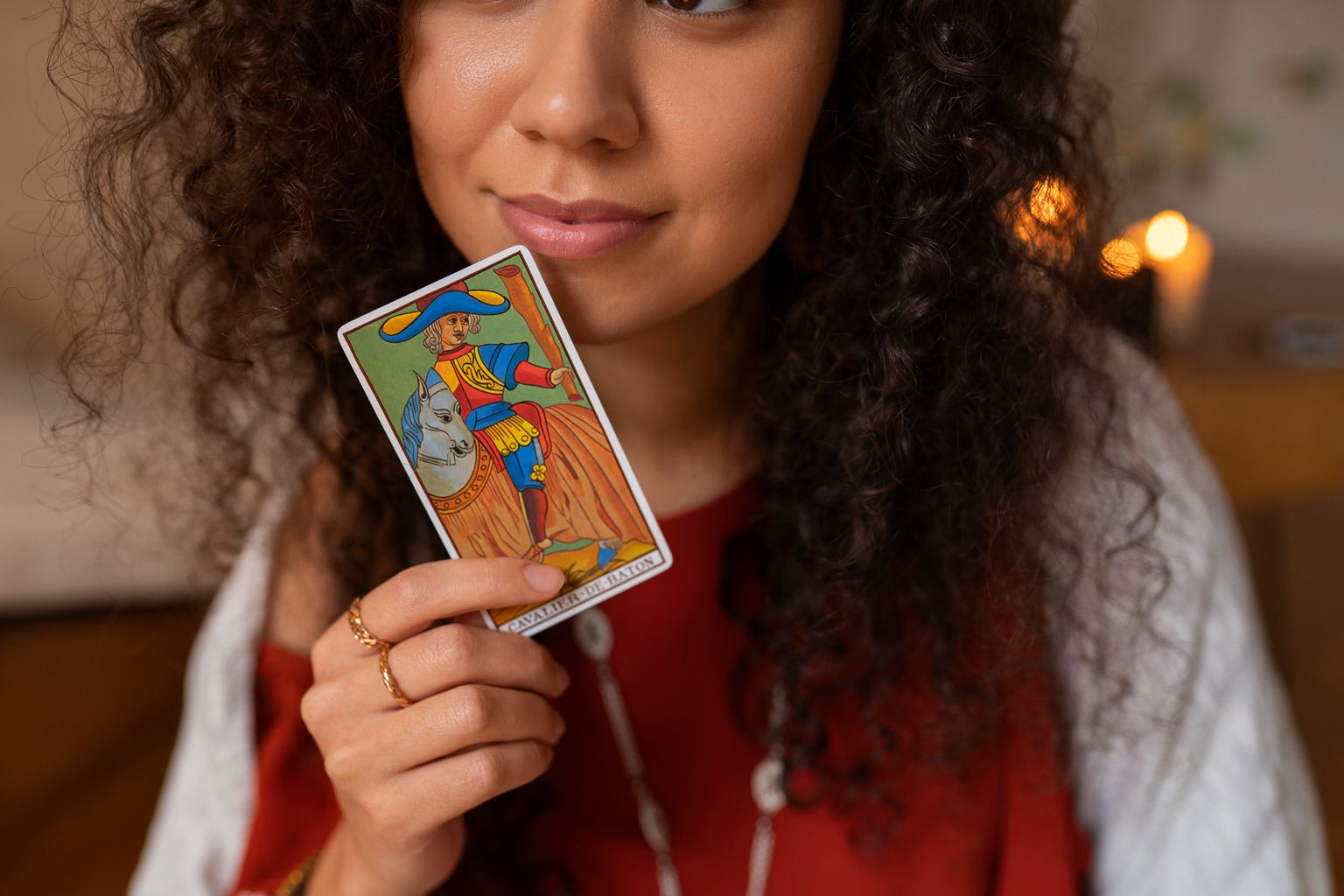
You’ve probably noticed. Someone at brunch pulls a little velvet pouch out of their bag. Your cousin who used to be firmly in her “I only trust data” era now has three decks on her nightstand. Your FYP is full of videos where someone in a cozy sweater shuffles and says “if this came up for you, you needed to hear it.” And suddenly, the bookstore has a whole wall of decks with art so gorgeous you want one even if you have no idea what to do with it.
So what happened?
The vibe shift nobody can quite explain
A few years ago, tarot was still a little niche. You’d see it at festivals, maybe on Halloween, sometimes as an ironic thing someone did “just for fun.” Now it’s in skincare ads. It’s on the covers of magazines. Celebrities talk about their morning card pull the same way they used to talk about their matcha.
The thing is, this isn’t really a tarot trend. It’s a much bigger shift.
People are tired. Tired of scrolling. Tired of the constant optimization. Tired of being told that if they just tracked their sleep, their steps, their macros, and their water intake, they’d feel okay. A lot of us looked around and realized that all the data in the world wasn’t actually answering the questions we cared about. Questions like, “why do I feel stuck?” or “why does this relationship keep looping?” or just, “what do I actually want?”
Tarot doesn’t promise to solve those. What it does is give you a few minutes of quiet. A pause. A mirror.
Why the cards, specifically?
Here’s the part that surprises people. Tarot has been around for roughly six hundred years. The imagery is old. The archetypes are older than that. When you look at a card, you’re looking at a symbol that has been worked over by generations of artists, thinkers, and dreamers. That’s a lot of human experience baked into seventy-eight little pictures.
Compare that to, say, another wellness app. The cards feel grounded in a way that a push notification never will.
And let’s be honest, the aesthetic helps. The art is stunning. Decks come in every mood now. Minimalist, botanical, cosmic, pastel, goth. There’s something for every vibe, and people love finding a deck that feels like them.
It’s also a quiet rebellion
There’s something almost rebellious about sitting down with a deck of cards and asking yourself a question the internet can’t answer.
You’re not googling. You’re not asking an algorithm. You’re not posting about it for likes. You’re just, for a moment, engaging with your own life through a totally different lens.
That feels rare now. And that’s part of why people are drawn to it.
The practical answer
Beyond the trend aspect, a lot of people pick up tarot because it’s actually useful. Not in a predicting-your-future way. More in a clarifying-what-you-already-feel way.
A card pull before a big conversation. A quick reading on a Sunday evening to set the tone for the week. A spread when you’re circling the same decision for the tenth time and can’t seem to see it clearly. These are small rituals, but they add up to something. A habit of checking in with yourself.
Is it silly? Is it serious?
It can be both. That’s kind of the beauty.
You can treat your cards like a fun party activity with friends. You can treat them like a nightly reflection practice. You can go deep into the symbolism and read books about the history. You can just look at the pretty pictures and see what lands. None of those approaches are wrong.
The people who are really into tarot right now aren’t all saying the same thing. Some treat it as pure psychology. Some as something more spiritual. Some as art therapy with a few extra steps. The cards make room for all of it.
So should you grab a deck?
Honestly, if you’re curious, yeah. Pick one that you find visually beautiful, because you’ll use it more if you like looking at it. Don’t feel like you need to memorize anything. Just see what comes up.
And if you’re not ready to buy your own deck but you’re still curious what the whole thing is about, there are easier ways in. A reading now and then can be a good introduction without the commitment. You get to see what tarot actually feels like, without the pressure of learning seventy-eight cards on a Tuesday night.
Either way, the deck on your friend’s coffee table is probably not a phase. It’s part of a bigger, quieter wave of people trying to slow down and listen to themselves again.
And honestly, that’s not a bad thing to be part of.
Also try one of these readings