The Cards You're Afraid to See
By Noor
Table of Contents
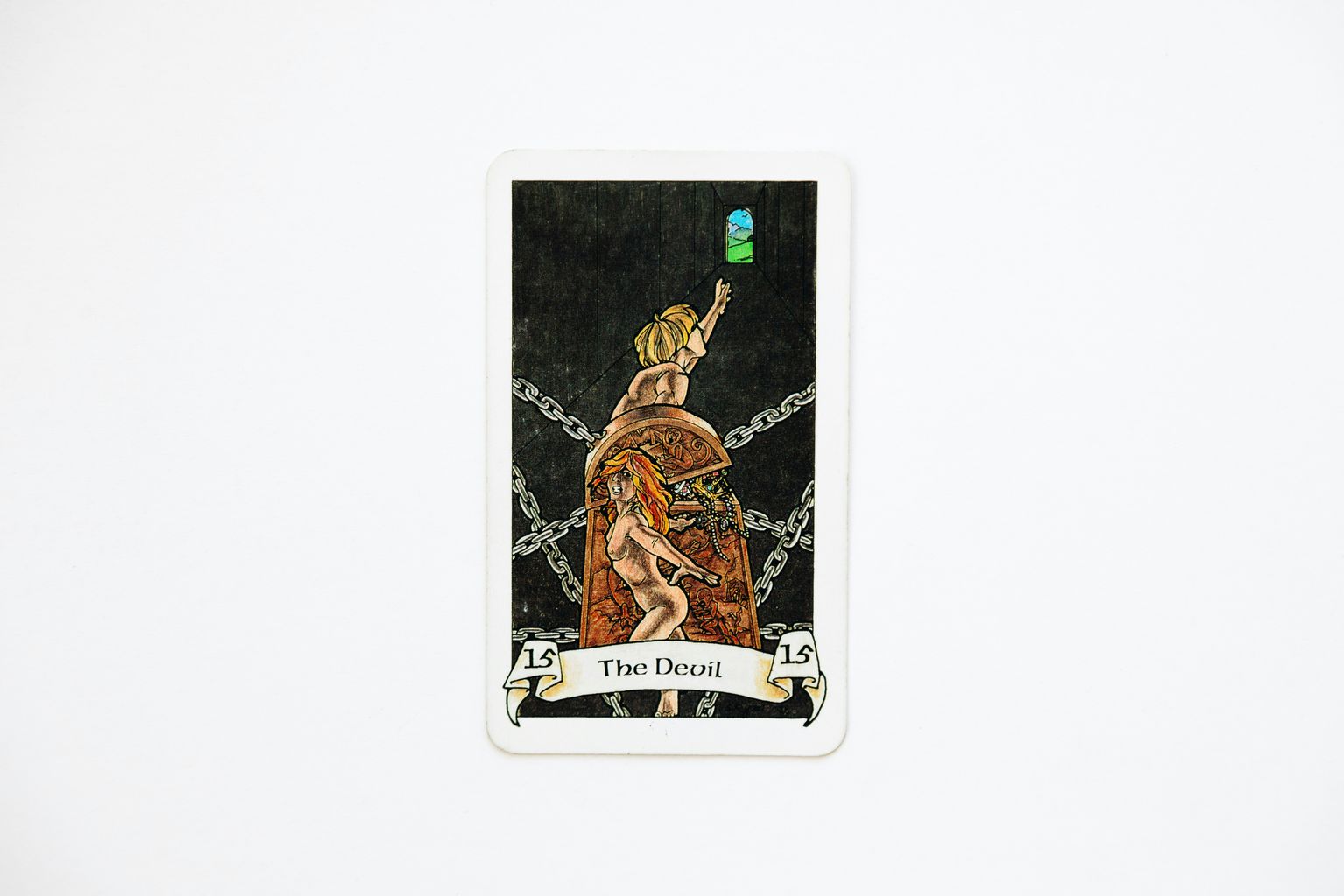
Almost everyone who has spent any time with tarot has one. A card they’d rather not see. Maybe you’ve never said it out loud, but there’s a small flinch when it appears. A tightening somewhere in your chest. A thought that flashes through your mind before you can stop it: not that one.
I find that fascinating. Not the card itself, but the reaction. Because if you sit with it long enough, that reaction tells you far more than any card ever could.
The flinch before the meaning
Most people who are nervous about certain cards will say it’s because of what the card “means.” But here’s what I’ve noticed over years of observing how people relate to tarot. The fear almost never comes from the card’s actual symbolism. It comes from what the person is already carrying when they sit down.
Think about it. Two people can see the same card in a reading and have completely different responses. One person feels curiosity. The other feels dread. The card hasn’t changed between those two moments. What changed is the person looking at it.
That’s worth paying attention to. When a card triggers something in you, it’s not the card doing the triggering. It’s something inside you that was already activated, already sensitive, already quietly humming beneath the surface. The card just gave it a name you could point to.
Fear as a compass
We tend to treat fear as a signal to retreat. Something feels uncomfortable, so we pull away from it. That’s a perfectly natural instinct, and in many situations it keeps us safe. But emotional fear, the kind that comes up when you’re sitting with a spread of cards on your kitchen table, is a different animal.
That kind of fear isn’t warning you about danger. It’s pointing at something unresolved.
I’ve come to think of it as a compass. Not one that tells you where to go, but one that shows you where you haven’t been willing to look. The cards you fear are often connected to the questions you’ve been avoiding. The conversations you haven’t had. The truths you’ve tucked away in some back corner of yourself because they felt too heavy to examine.
And the remarkable thing is, once you actually turn toward that fear and look at it directly, it often loses much of its power. Not all at once. Not dramatically. But gradually, the way a shadow shrinks when you bring a light closer.
Why avoidance feels like safety
There’s a reason we avoid the things that make us uncomfortable. It works, at least in the short term. If you never look at the thing you’re afraid of, you never have to feel the full weight of it. You can keep moving through your days with the vague sense that something is unresolved, but without having to sit in the discomfort of actually facing it.
The problem is that avoidance has a cost. It narrows your world. Each thing you refuse to look at becomes a small boundary you’ve drawn around your own life. Over time, those boundaries add up. You start making choices not based on what you want, but based on what you’re trying not to feel.
I’ve seen this pattern in myself and in so many people I’ve talked to about their relationship with tarot. Someone will say they don’t want to do a reading right now because they’re “not in the right headspace.” And sometimes that’s genuinely true. But other times, if you listen carefully, what they’re really saying is: I’m afraid of what might come up.
That honesty, when you can get to it, is actually the beginning of something. It’s the moment where the real work starts.
What your fear is protecting
Here’s a question worth sitting with. What exactly are you afraid the cards will show you?
Not in terms of specific imagery or traditional meanings. Forget all of that for a moment. What is the feeling underneath the fear? Is it a fear of loss? Of change? Of having to admit something you’ve been pretending isn’t true? Of realizing that a chapter of your life needs to end?
Most of the time, when I ask people to go beneath the surface of their card-related anxiety, they arrive at something deeply personal. Something that has nothing to do with tarot and everything to do with where they are in their lives. The cards become a screen onto which they project the things they’re not quite ready to say out loud.
And that projection isn’t a flaw. It’s actually one of the most valuable things about sitting with tarot. It creates a space where your inner world becomes visible, even if just for a moment. The question is whether you’re willing to look at what surfaces, or whether you’d rather shuffle the deck and try again.
Turning toward, not away
I’m not going to pretend this is easy. Facing the parts of yourself that you’ve been avoiding takes real courage. It asks you to be honest in a way that our daily lives rarely require. Most of the time, we can get by on the surface. We can stay busy, stay distracted, stay focused on the next task or the next problem that needs solving.
But there are moments when life asks more of you. Moments when the thing you’ve been avoiding quietly steps into the room and sits down across from you. A tarot reading can be one of those moments, if you let it.
The cards you’re afraid to see aren’t your enemies. They’re not omens or warnings or punishments. They’re mirrors. And mirrors only show you what’s already there.
What you do with that reflection is entirely up to you. But I’ve found, both in my own experience and in watching others, that the people who are willing to look tend to find something unexpected on the other side of that fear. Not necessarily answers. But a kind of relief that comes from no longer running.
If you’ve been carrying a quiet dread about a particular card, or about tarot in general, maybe it’s worth asking yourself what that dread is really about. You might be surprised by what you find. And if you’d like some space to explore that, a reading can be a gentle place to start.
Also try one of these readings